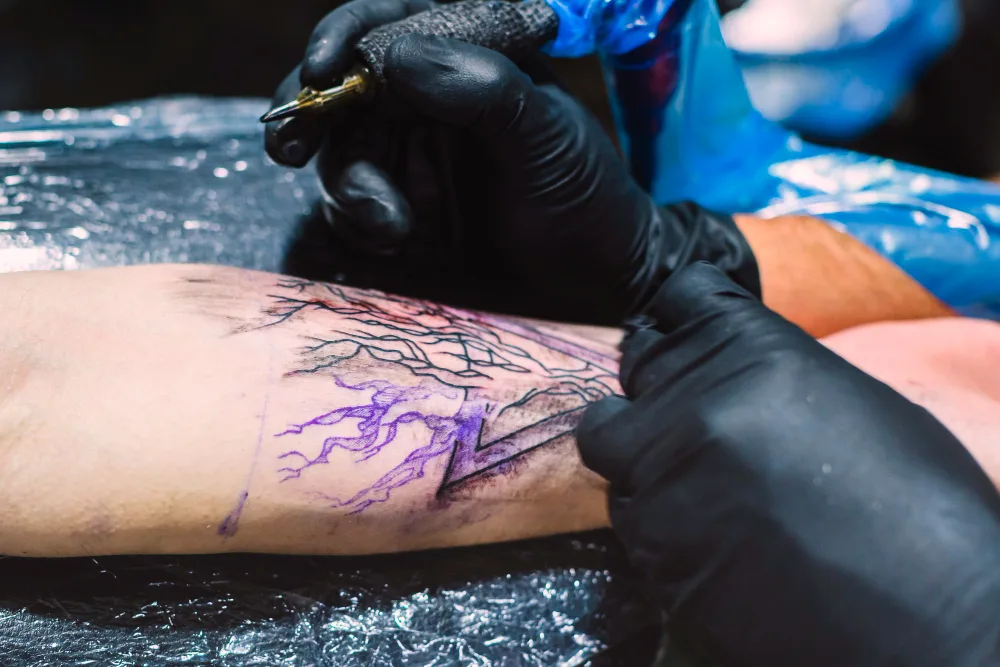
Tattoos have shifted from the fringes of counter-culture to the red carpets of Hollywood, and Florida is right at the center of this transformation. When stars like Justin Bieber and Rihanna started showcasing intricate ink, it changed public perception overnight. This "Celebrity Effect" has rippled from the high-end studios of Miami all the way up to Central Florida, raising the bar for what clients expect. Today, getting a tattoo isn't just about rebellion; it's about collecting fine art on your skin.
What Defines a High-Quality Tattoo?
A high-quality tattoo is defined by clean lines, consistent saturation, and how well it holds up over decades, not just days. In our years serving Central Florida, we've learned that a truly great piece looks just as impressive after five years as it does when you walk out of the shop. It requires a mastery of technical application combined with artistic vision.
Technical skill is the foundation. This means the artist injects ink at the correct depth—too shallow, and it fades, too deep, and it blows out (blurs). You want to see crisp edges and smooth shading without patchy areas. A skilled artist also understands how different skin types react to trauma and adjusts their machine speed and hand pressure accordingly.
Artistic vision is equally critical. It's not enough to trace a stencil. The best tattoo artist Orlando Florida has to offer will understand composition, flow, and how a design wraps around the body's natural curves. They consider how the image will age, knowing that bold lines often hold up better against the sun and time than micro-details.
Why Does Ink Quality Matter in Florida?
Florida's intense sun and humidity act as a stress test for tattoos, making ink quality a major factor in longevity. Cheap pigments often contain heavy metals or plastics that break down quickly under UV exposure, turning vibrant blacks into dull blues or greens. High-quality vegan or organic pigments are designed to resist this breakdown.
In Orlando, where the UV index frequently hits 11+, the difference between premium and standard ink becomes obvious within a year. We always tell clients in neighborhoods like Lake Nona or Winter Park that investing in quality ink is an investment in their future appearance. Premium inks are more concentrated, meaning they require fewer passes to achieve saturation. This results in less trauma to the skin and a faster healing process.
Furthermore, high-quality ink is less likely to cause allergic reactions. While reactions are rare, they are more common with red and yellow pigments found in lower-tier brands. A professional artist will always be transparent about the ink brands they use, ensuring safety alongside aesthetics.
How Much Does a High-Quality Tattoo Cost?
In Orlando, you can expect to pay between $150 and $250 per hour for a high-quality tattoo artist. While many shops have a shop minimum of around $100 for very small pieces, larger custom work is almost always priced by the hour. A full sleeve, for example, often takes 40+ hours and can cost anywhere from $6,000 to $10,000 spread over multiple sessions.
You might find "deals" for $50 tattoos, but in this industry, you truly get what you pay for. The cost covers more than just the time in the chair. It pays for:
· Single-use, sterile needles and tubes.
· High-end equipment and power supplies.
· The years of apprenticeship and training the artist underwent.
· The hours spent drawing and customizing your design before you even arrive.
When you break it down, paying a premium ensures you aren't spending three times as much later on laser removal or cover-ups. We recently helped a customer in Dr. Phillips who spent $300 on a "bargain" portrait, only to pay $1,200 later to fix the shading and line work. Quality is always cheaper in the long run.
The Role of Placement and Anatomy
Placement is the unsung hero of a great tattoo; it determines how the art moves with your body. A static image on a piece of paper changes completely when placed on a living, breathing canvas. For instance, a circular design might look warped if placed on the forearm without accounting for the twist of the radius and ulna bones.
An experienced artist considers muscle groups. A design placed on the bicep should flow with the muscle's shape, not fight against it. This ensures the tattoo looks natural whether you’re flexing or relaxed. We often see issues where inexperienced artists place straight lines on curved body parts like ribs or calves, creating an unintentional illusion of warping.
Longevity also depends on placement. Areas with high friction (like fingers or feet) or high sun exposure (like shoulders) fade faster. If you work outdoors in construction or landscaping in Orlando, a forearm tattoo will need significantly more touch-ups than one on your inner bicep or chest.
Skill vs. Style: Finding the Right Artist
Finding the best tattoo artist Orlando Florida means matching their specific skillset to the style you want. A master of American Traditional might struggle with a Hyper-Realistic portrait, and vice versa. Tattooing is not a one-size-fits-all trade.
· Realism: Requires smooth shading and a deep understanding of light sources.
· Traditional: Relies on bold, black outlines and a specific color palette.
· Fine Line: Demands an incredibly steady hand and precise depth control.
Don't just look at a portfolio; look at healed photos in that portfolio. Fresh tattoos almost always look bright and crisp. Healed photos show the truth—whether the lines stayed solid and if the color held. If an artist only posts fresh work, ask to see healed examples. It's a standard request that any professional should be happy to fulfill.
The Importance of Proper Aftercare
Tattoo aftercare accounts for about 50% of the final look of your tattoo. You can have the best artist in the world, but if you expose fresh ink to the bacteria in Lake Eola or the chlorine in a community pool, you risk infection and ink loss.
During the first 2-3 weeks, your tattoo is essentially an open wound. In Florida's humid climate, moisture management is tricky. You want to keep it moisturized but not suffocated. Over-moisturizing can lead to bubbling and scabbing, while letting it dry out too much can cause cracking.
We recommend using a thin layer of fragrance-free lotion or specialized tattoo balm 2-3 times a day. Avoid submerging the tattoo in water (showers are fine; baths are not) and keep it out of direct sunlight. Once it's fully healed, daily sunscreen is the single best thing you can do to keep it looking new for decades.
When to Contact a Professional
If you notice excessive redness, heat, or throbbing pain after the first 48 hours, contact your artist or a medical professional immediately. While mild soreness is normal, signs of infection move fast in our humid environment.
Also, reach out if you notice significant "fallout" (ink disappearing) during the peeling phase. Some flaking is normal, but large patches of missing color usually require a touch-up. Most reputable artists offer a free touch-up session within the first few months to ensure the piece settles perfectly.
Ready for Your Next Piece?
A high-quality tattoo is a collaboration between a skilled artist and a dedicated client. It requires research, investment, and patience, but the result is a piece of living art that stays with you forever.
If you’re ready to turn your vision into reality, we're here to help. We combine technical precision with artistic flair to give you ink you'll be proud to wear.
Contact Tim Lease Tattoos at 407-725-7072 today to schedule your consultation.